
A chatbot answers a question. An AI agent gets the job done. That's the leap that "agentic AI" represents — and it's one of the most important shifts in how businesses will use AI over the next few years.
What makes AI "agentic"
An agentic system doesn't just generate text. It can plan a sequence of steps, call tools and APIs, make decisions based on what it finds, and execute actions to complete a goal. Ask a chatbot to "process this refund" and it explains how. Ask an agent and it checks the order, verifies the policy, issues the refund, and updates the customer — then reports back.
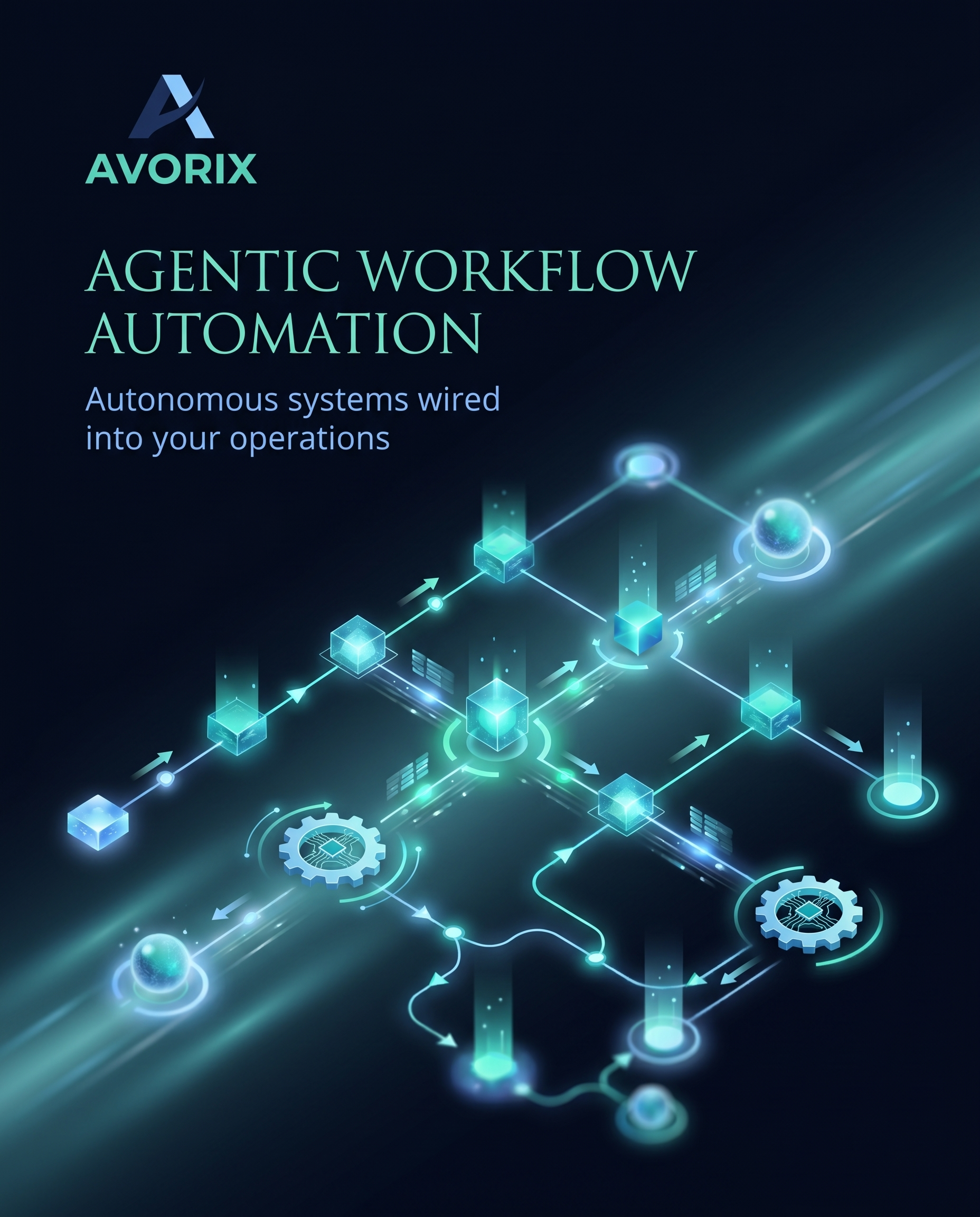
The building blocks are a reasoning model, a set of tools it's allowed to use, memory of what it has done, and a loop that lets it observe results and adjust. Orchestrated well, these turn AI from an advisor into a doer.
Where agentic AI delivers real value
The best early use cases are multi-step workflows that are tedious but rule-based: customer-support resolution, data gathering and entry, report generation, IT and operations tasks, and research that spans multiple sources. Anywhere a person currently clicks between five systems to complete one request is a candidate.
The value isn't just speed — it's freeing skilled people from repetitive coordination so they can do work that actually needs human judgment.
The risks you must design for
Autonomy cuts both ways. An agent that can take actions can also take wrong actions at scale. That's why serious agentic deployments are built with guardrails: clear boundaries on what the agent can do, approval steps for high-stakes actions, full logging of every decision, and the ability to roll back. You give the agent enough autonomy to be useful and enough constraints to be safe.
Start with read-only or low-risk actions, keep a human approving anything consequential, and expand autonomy only as the system earns trust through measured reliability.
How to start without overreaching
Begin with one well-scoped workflow and one clear success metric. Map the steps a human takes today, identify which can be automated, and build the agent to handle the happy path while escalating edge cases to a person. Instrument everything so you can see what the agent did and why. This contained approach delivers value quickly and surfaces problems while they're still cheap to fix.
The takeaway
Agentic AI moves automation from "answering" to "acting." Done with the right guardrails, it can take entire workflows off your team's plate. The winners won't be the companies that deploy the most autonomous agents — they'll be the ones that deploy them safely, observably, and on the right problems.
Want to put an AI agent to work in your operations — safely? Talk to AVORIX.